
Recently ViewedAircraft Sales
Flight Training
Lesson Plans
Services
Real Estate
Store







|

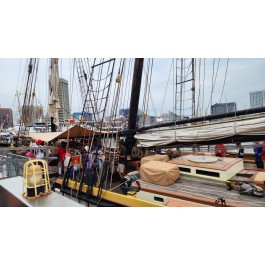
Lynx SchoonerDescriptionLynx is a square topsail schooner based in Nantucket, Massachusetts. She is an interpretation of an American letter of marque vessel of the same name from 1812. The original Lynx completed one voyage, running the Royal Navy blockade; the British captured her in 1813 at the start of her second voyage and took her into service as HMS Mosquidobit.The original Lynx, a privateer ship, was a topsail schooner built in 1812 in the Fells Point neighborhood in Baltimore, Maryland by Thomas Kemp. During the War of 1812 it was captured by the British and sent to England, where it was deconstructed and thoroughly documented by the Royal Navy. The replica of Lynx sailing today is based on plans of the original Lynx made by the British. It was designed by Melbourne Smith and built by Taylor Allen and Eric Sewell of Rockport Marine in Rockport, Maine. The Lynx was launched on July 28, 2001, at Rockport. Her port of registry is Portsmouth, New Hampshire. Starting from winter 2021, Lynx will spend winters, from November to May, at Morningstar Marinas on St. Simons Island, Georgia. Previously, Lynx stayed in St. Petersburg, Florida during the winter, but relocated after the city began renovation on St. Pete Pier.  Click here for all ships that were a part of Sail250 Sail250 Detailed Information
|


Your Choice for Aircraft Sales & Aviation Services
Kraemer Aviation Services
21520 Blunt Road
Germantown, MD 20876
21520 Blunt Road
Germantown, MD 20876
Telephone: (301) 520-2109
Follow Flymall On


Copyright © 2009-2026, Kraemer Aviation Services